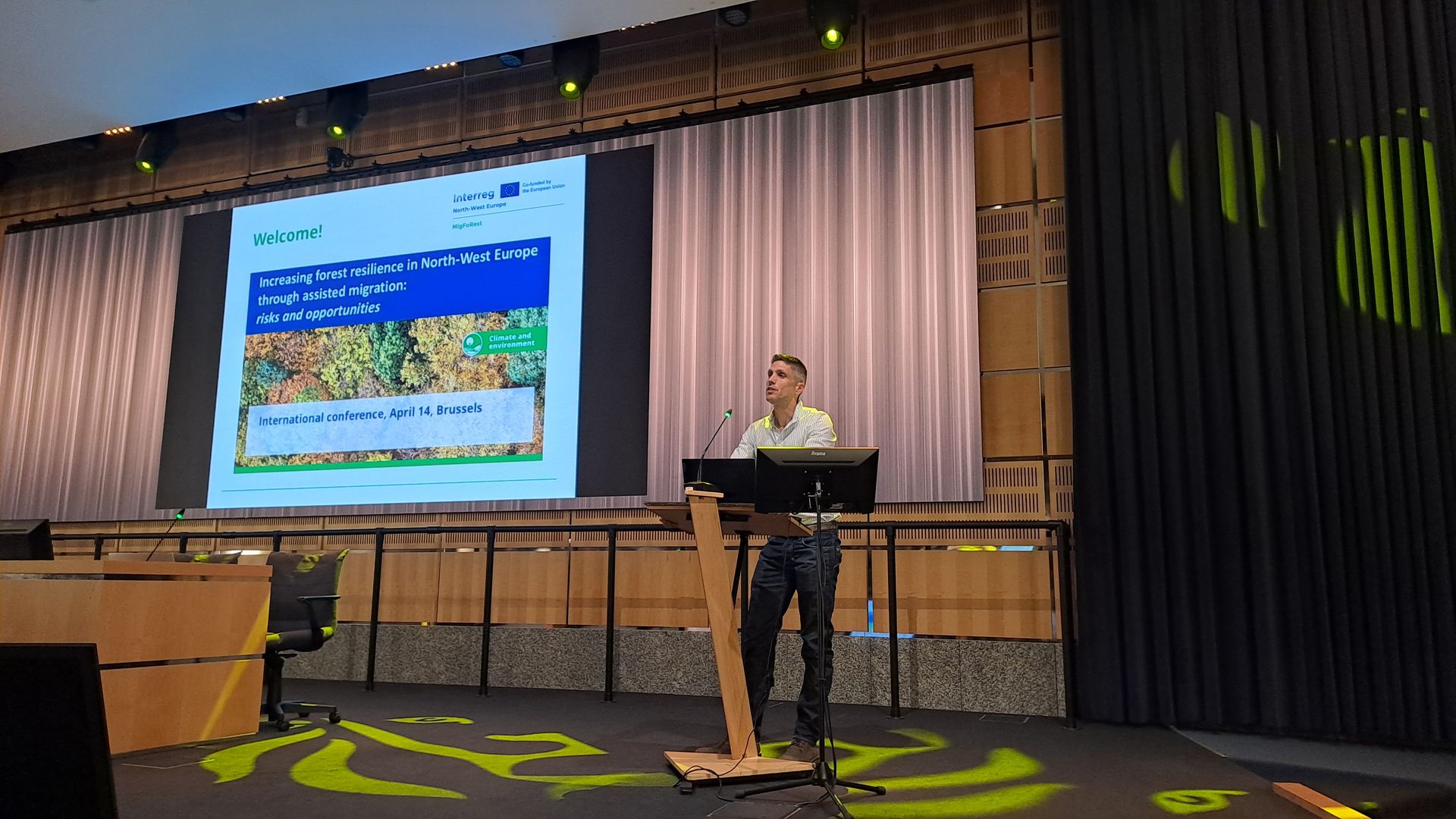
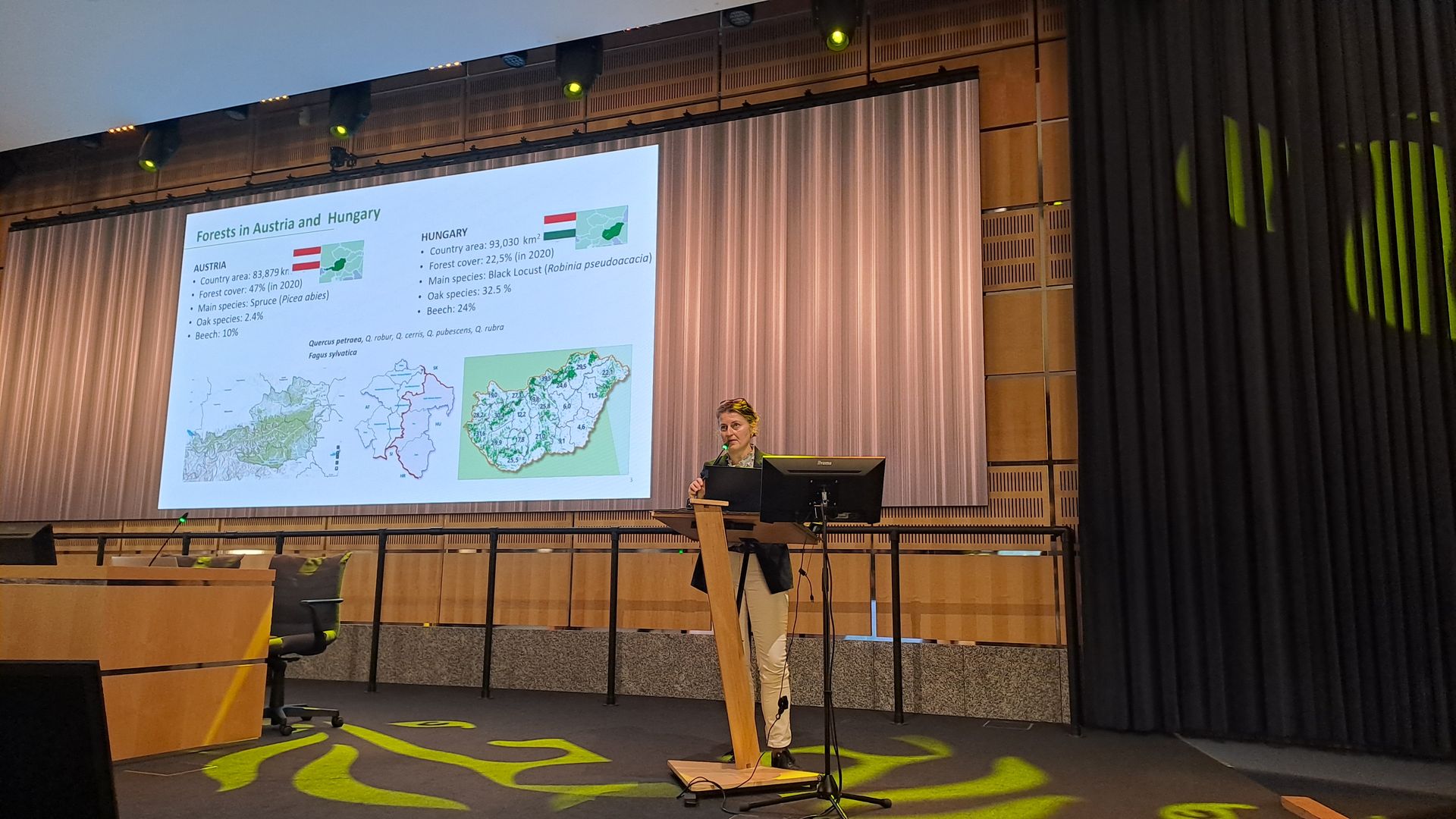
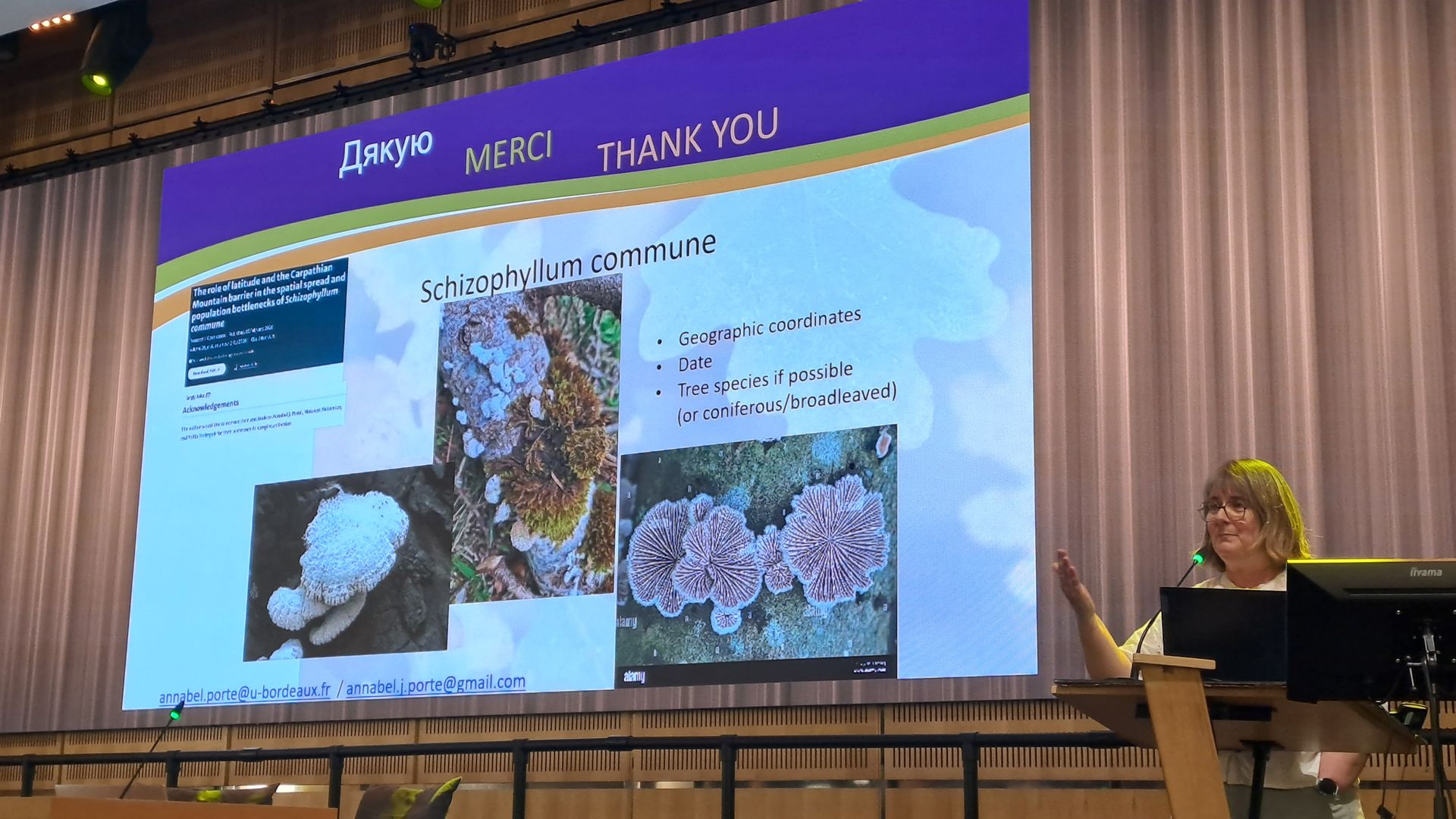
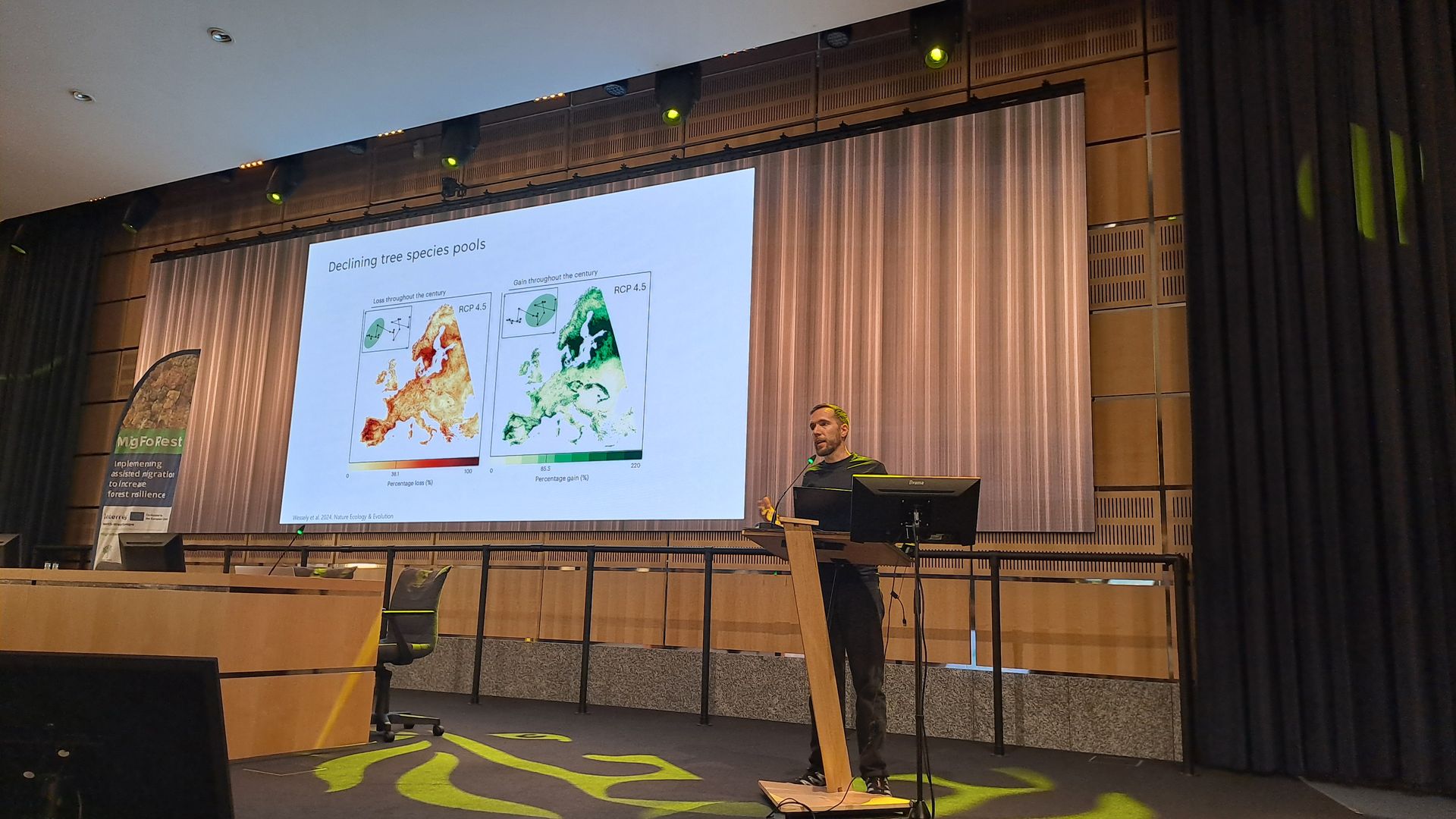
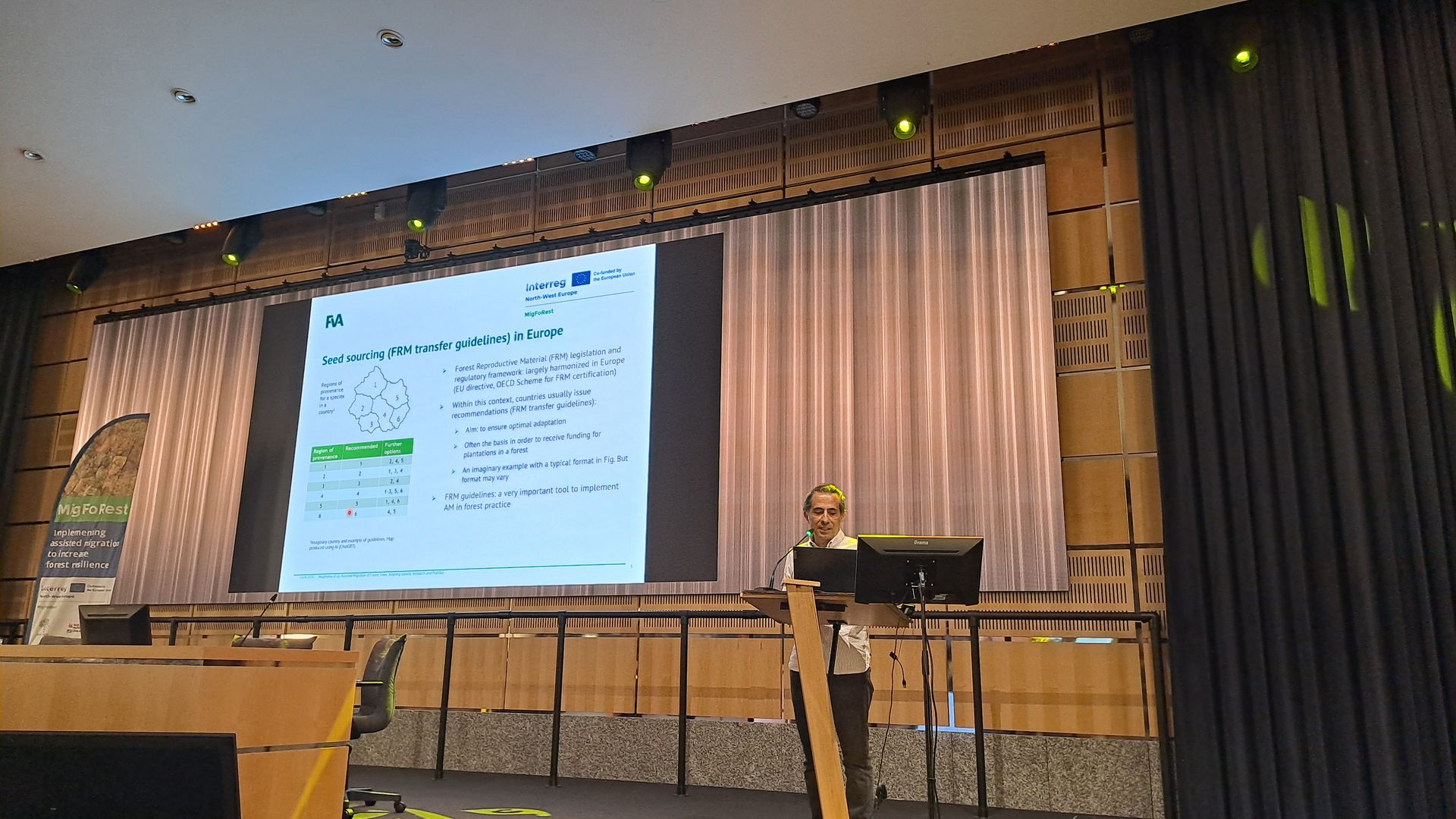
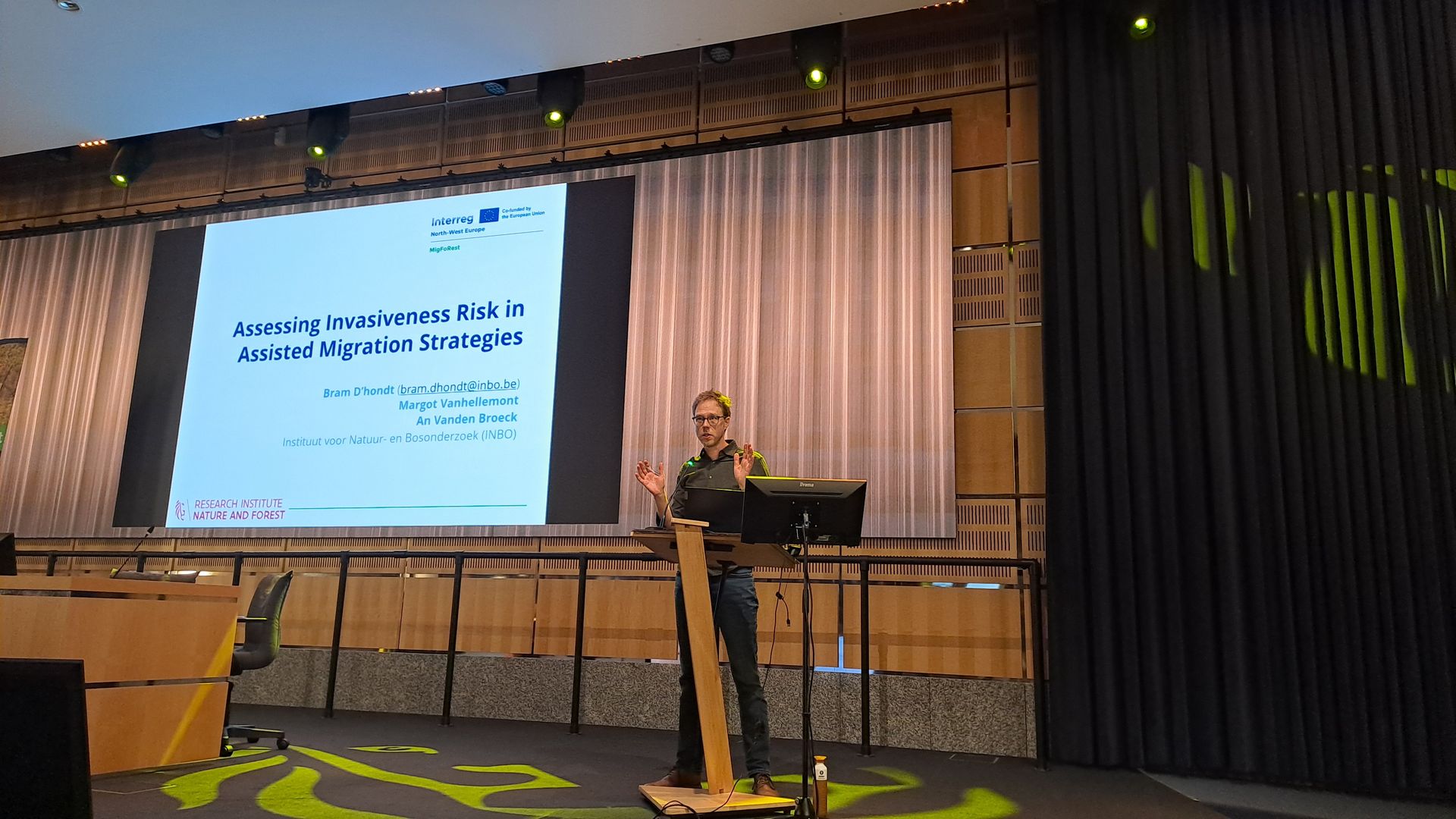
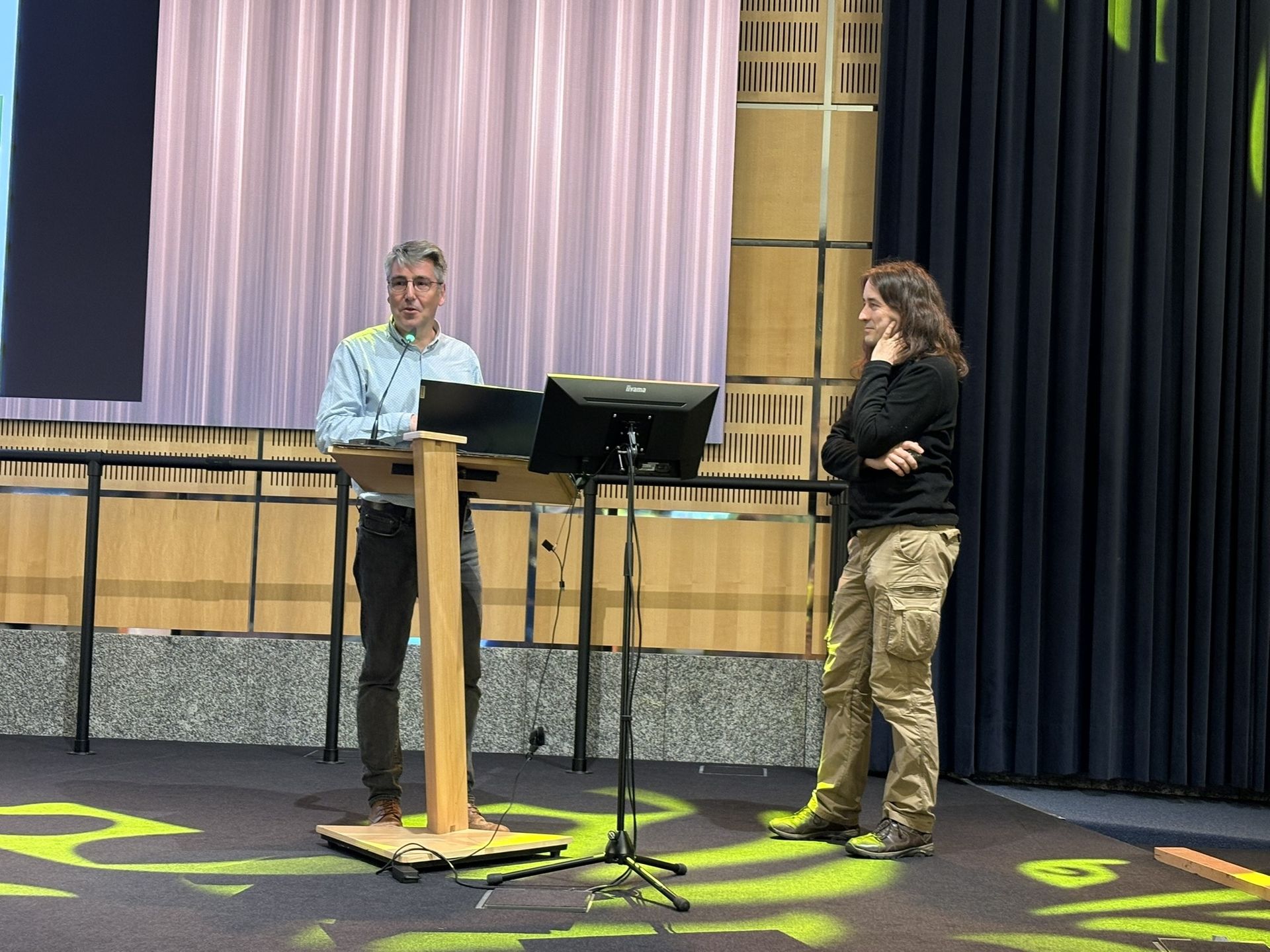
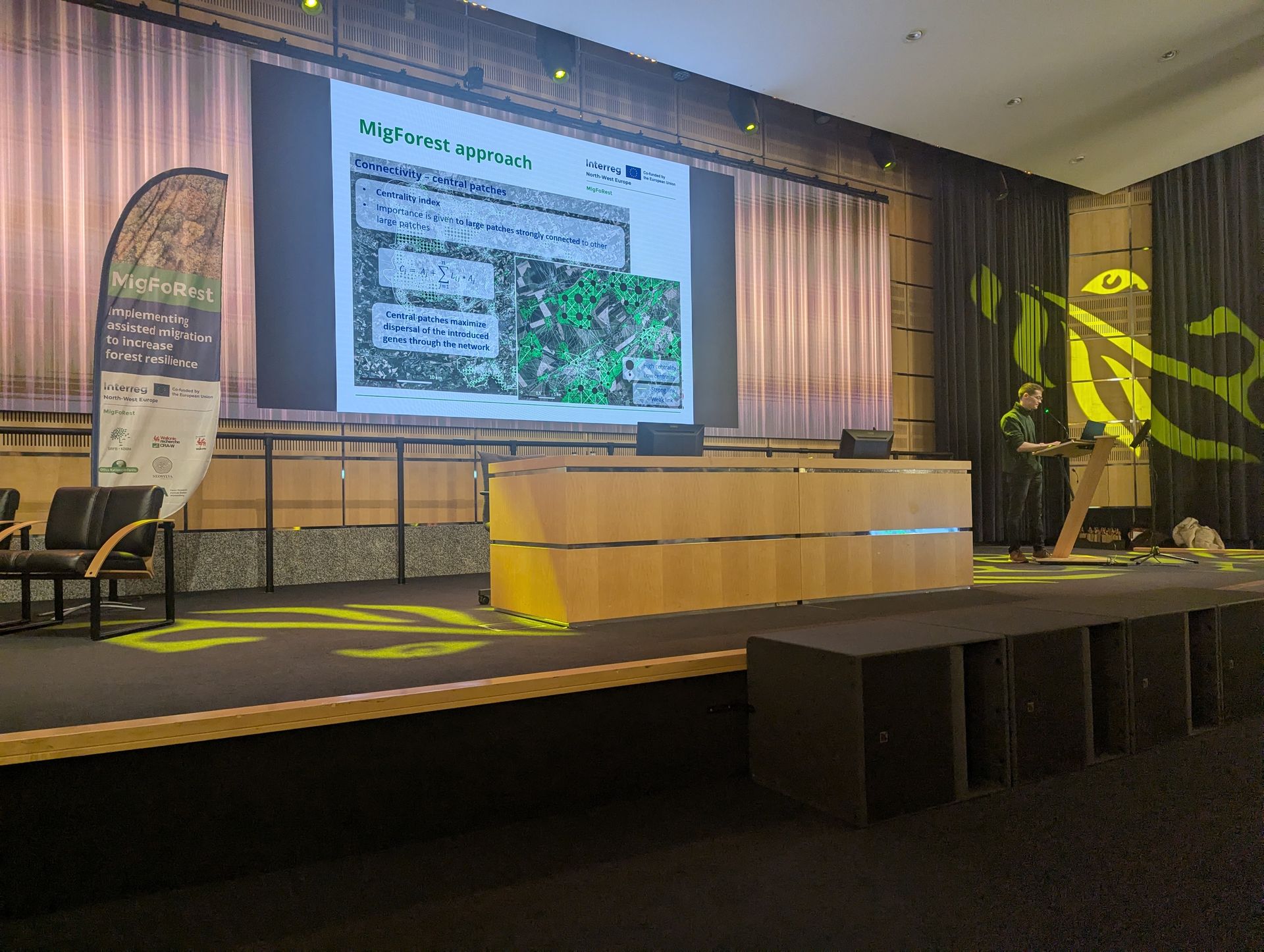
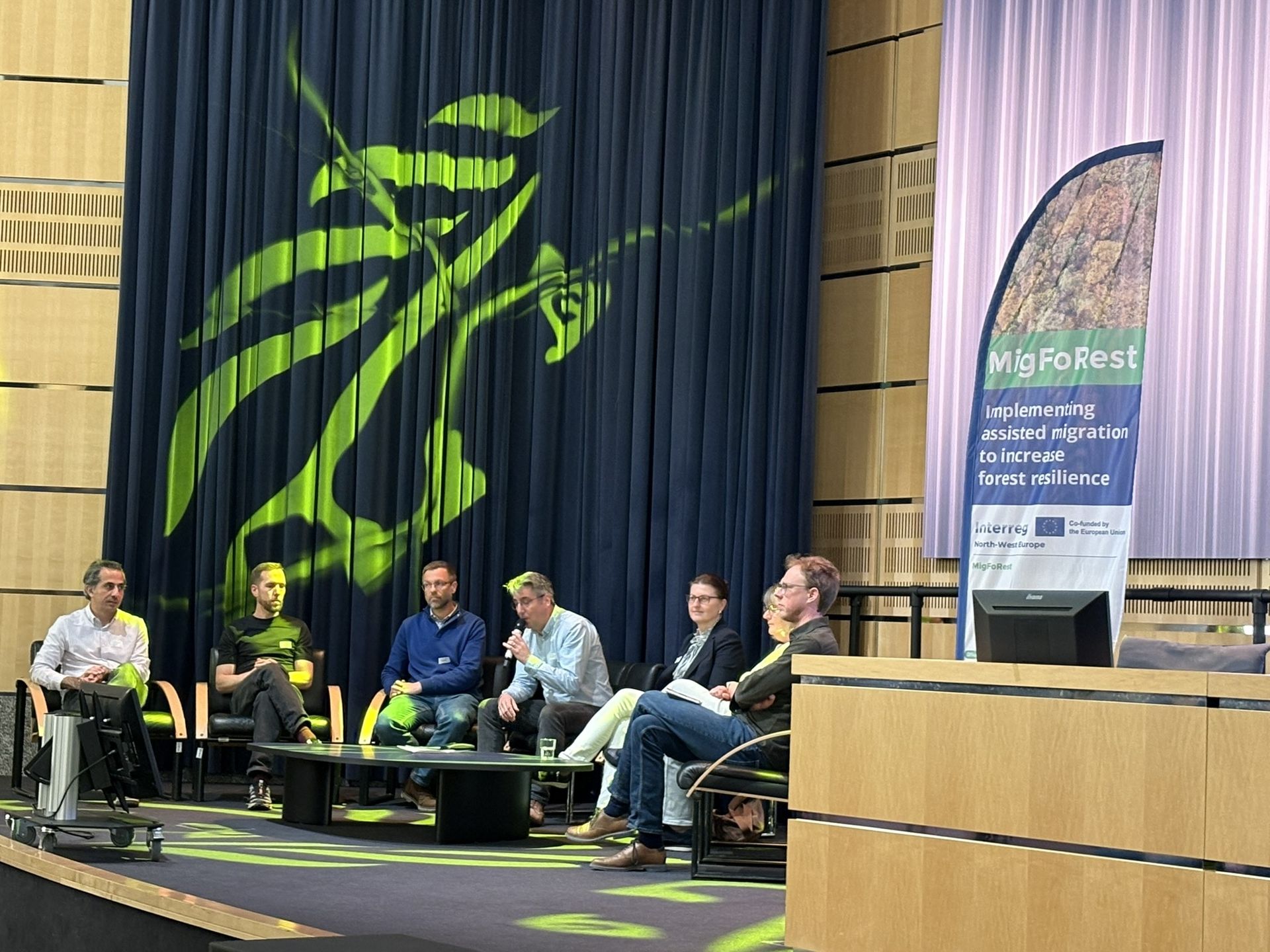
On April 14, the 1st MigFoRest International Conference took place in Brussels, bringing together just under 100 researchers, forest practitioners, policymakers, and project partners for a full day of dialogue on assisted migration as a strategy to support forest resilience under climate change. The conference provided a valuable opportunity to confront scientific advances, operational challenges, and policy developments shaping the future of European forests.
Access the presentations here
Some takeaways ...
The morning sessions focused on new tools and methodologies for selecting species and provenances adapted to future climates. Presentations highlighted a strong convergence between assisted migration approaches used across projects, while also underlining that implementation must be modulated according to species vulnerability and local context. Participants also identified shared operational challenges, notably limitations in seed supply and issues related to sapling quality, emphasizing the need for coordinated solutions.
A key scientific message was the importance of better understanding the physiological mechanisms underpinning resistance to drought and heat. Such knowledge is essential to guide informed decisions on species and provenance choice. In this context, the innovative use of urban trees as living laboratories was presented as a promising opportunity to study stress responses under extreme conditions.
In the afternoon, discussions stressed that assessing adaptive capacity requires combining climatic, phenotypic, and genetic data. Risk analyses conducted within the projects showed that the species considered generally present a low to moderate ecological risk, which must be carefully balanced against the potential benefits of assisted migration.
... and a key conclusion
As the conference concluded, a shared understanding emerged: assisted migration lies at the intersection of urgency, uncertainty, and responsibility. Climate change is already reshaping ecosystems faster than many tree species can adapt, challenging conservation approaches based solely on historical baselines. Assisted migration is not a simple or universal solution—but neither is inaction a neutral choice.
Progress will depend on case-by-case evaluation, long-term monitoring, and collaboration across disciplines, institutions, and borders, while also integrating social perspectives, policy frameworks, and local knowledge.